
Celebrating Hispanic and Latinx Heritage Month: our employees' perspectives
Text
September 15 – October 15th marks the month to celebrate the rich histories, cultures and contributions of those with Hispanic or Latinx heritage. Throughout the month, we have been hosting cultural events led by some of our own employees, with the goal of fostering learning, community and togetherness. From virtual cocktail and ceviche-making classes, to breaking a sweat in a Zumba class, we've been loving commemorating the beauty of Hispanic and Latinx culture.
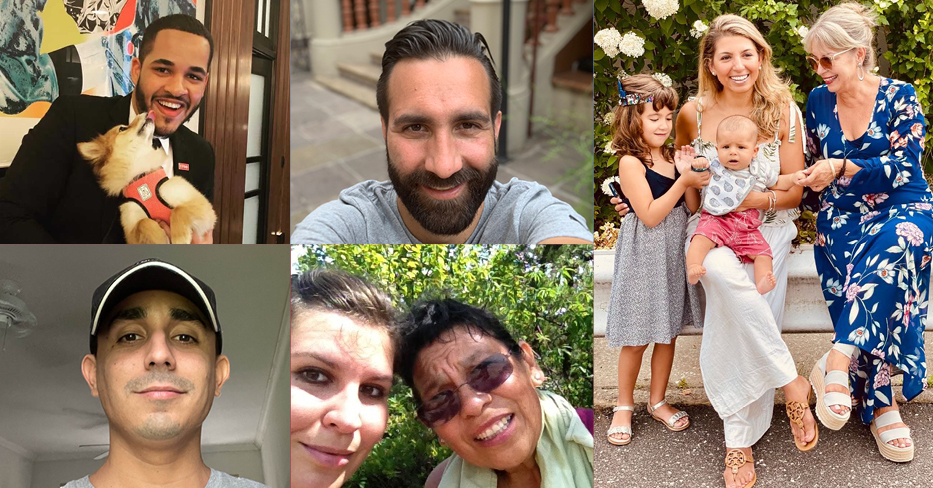
We're also dedicated to amplifying the voices of our employees who identify as Hispanic or Latinx. We have asked five of our employees to share their unique perspectives on this celebratory month and what their heritage means to them. Read what they had to say below - or watch them speak on camera on Instagram!:
Rambo Rolle Lee (Sales Analyst - NYC)
Dale Bloom (Credit Analytics, Risk Manager - NYC)
Diego Hentschel (Jr. Sales Representative - Miami)
Maria Calderon (Global Sales Manager, Hedge Funds, ETFs and LATAM - NYC)
Juan Araoz (Sales Representative - Miami)
--
What does Hispanic/Latinx Heritage Month mean to you?
Rambo: To me, Hispanic Heritage Month is a month where we recognize those who have contributed great into society, and also have paved the way for people like me personally to be where I am today. One of my goals in the future is to ensure that I keep uplifting Hispanics and make sure they reach their full potential.
Dale: This month provides an opportunity to reflect on how grateful I am for my ancestry. That my ancestors succeeded in raising their families in the face of poverty - 8 kids on my mom's side - and yet they still managed to pass on and imprint a multi-generational love of our cultural heritage through artistic creativity, paper artwork, recipes. But also in traditions. Like in the holidays, we celebrate Las Posadas, and we also get together for family tamale-making.
Diego: It means a lot. I think it’s very important that this country does whatever it can to bring awareness and inclusion to minority groups of people. In this case, the community is huge in this country. A lot of us and our ancestors went through a lot of struggles to get to this country and to be able to provide for our families.
Maria: I love it! It means I get to celebrate who I am and where I come from. It’s a moment to celebrate the culture and those who came before us to build this nation. They have had amazing contributions to the US melting pot and to the diversity here. Time to celebrate!
Juan: It is the opportunity to create awareness of our influence in the US. Not only in food and music, but also in technology and in the Supreme Court.
What does being Hispanic/Latinx mean to you?
Rambo: Being Latino means the world to me. It means sharing a culture, a language, a history with others. Even though we speak the same language, we all come from our own unique backgrounds, so we have our own unique stories. It also allows me to stay connected to my roots back in the Dominican Republic, which is something I'll carry forever.
Dale: When I reflect on being Mexican, I often ask myself "what are some of the cultural elements that I've lost or failed to pass on?" Unlike my mother, who as I was growing up, sewed intricate folklórico dresses, she choreographed dances outside of her own job and led family tamale sessions...I often feel that I haven't kept up with my own responsibility to my ancestry. I'm terrible at Spanish, I prefer Hip-Hop to folklórico, and let's not tell my mom this, but I never really enjoyed eating tamales. What I do, is I make a promise to myself to try to incorporate something along the way - like making enchiladas at home for the first time. I do have to place a frantic call to my mom to ask "am I doing something wrong?"
Diego: It means a lot, honestly. It really turned me into the person that I am today. Especially growing up in Miami, where 99% of the people here come from up with a Latin background, it really gives you a sense of inclusion. You feel like you’re part of this different community that has such a strong sense of culture and pride for their countries. I think that’s amazing. I wouldn’t give it up for anything else in the world.
Maria: It means that the party and the family travels with me. It’s everything...it’s who I am and I can’t change that. My accent probably doesn’t let anyone forget that, but more importantly it gives me the power to achieve. It gives me the fire to keep going and to pull through almost anything. It’s everything.
Juan: As a Bolivian and Latino, it means my roots and my family, even though I have been living in the US for almost twenty years.
What are some of your favorite foods that represent your culture?
Rambo: The dish that always reminds me of my home country is Mangu Salami Queso Huevo, which means mashed plantains, eggs, salami, and cheese. It's something I try and eat every single morning because I feel like it keeps me connected with my home country.
Dale: Ooh the food question, yay! My mom would always make a homemade pinto bean soup with ham hocks and queso fresco, corn and flour tortillas, so that was definitely one of my most favorite foods growing up. The other food that I really enjoy is something called Conchas. It's a kind of Pan Dolce, or sweet bread. It's not too sweet but it's really great with coffee.
Diego: Well, being that Mexico has the best food in the world, the list is endless. Just to name a few: tacos, flautas, chilaquiles, mole, quesadillas. Really, the list is endless. Not just the flavor itself, it’s also the whole presentation in each Mexican dish. From the flavor to the different colors, it’s really second to none.
Maria: Favorite foods! There are literally hundreds. We could start with the basics. I love tacos, quesadillas, enchiladas. I mean, you name it. Mexican food is one of the most robust, and I think we Latins were born to eat.
Juan: My favorite dish is called Plato Paceño. It is fried cheese, white corn, lima beans and potatoes. It always comes with a spicy sauce called llajua.
What is something you feel more people should be aware of as it relates to Hispanic/Latinx culture?
Rambo: We all have different stories, but we come to this country with a similar goal, and it's to accomplish something. It could be anything different. A lot of us are first timers - first time graduates, first time home buyers, first time even car buyers. But I want to make sure we all think of Hispanics as hard working people with a goal to accomplish.
Dale: If you met my mom, there's a good chance you might identify her as Mexican. She avoids eye contact by default - even now, at 76 years old - because after years of firsthand encounters of negative Mexican stereotypes, she'd rather lower her head than raise it. To my knowledge, my mom is the strongest person in the world. Her life cannot be distilled to a single label. Her story and her experiences should not be overwritten with media or political messages that attempt to authenticate Mexicans into a single story or image. My mother's experiences not only shaped her, they shaped her children, they shaped me. To the point where I've hidden my heritage from people around me - scared to be targeted by stereotypes, but after my first couple of decades keeping my head down, as a Mexican, a woman and a technologist, the last thing I want is to further any buy-in to normalizing ethnic and cultural fears.
Diego: I think people should be aware of the fact that the community has so much pride and respect for their culture and their individual countries. When we speak Spanish to each other, it’s not to exclude anyone, it is us embracing our own culture and bringing ourselves together for a few minutes a day, whenever we can. I think that’s huge.
Maria: What’s really important about the Latin culture is that it has a long history. It was here in the US way before the US became a nation. The Southern border – Texas, Arizona, New Mexico, California – were all part of Mexico after its independence from Spain. So, that just gives you a hint of the long history of Hispanic and Latinx people in the US. I would just say, get to know our community. It is fragrant, it is beautiful, it is loving – it is truly a carnival. There are so many stories and history behind us. Get to know us.
Juan: Even though Hispanics and Latinx people share the same culture as a whole and we have a lot of commonalities, we also have different traditions, music and foods. We have to be aware of the difference between countries and backgrounds as well.
What advice can you offer to your coworkers to make MarketAxess an even more inclusive place to work for Hispanic/Latinx employees?
Rambo: My best advice to my coworkers here at MarketAxess is to keep doing what you’re doing. Thank you so much for being so inclusive. Thank you so much for teaching me everything I know today. I want to make sure I pay it forward in the future, but as for now, thank you for everything you have done for me.
Diego: My advice would be more for future employees. Give members of the community a chance. Not just in the Latin team at MarketAxess, but at every other department. I really think the community has a lot to offer. Such hard workers at the end of the day. I know as a company, we won’t be disappointed if we bring on more Latin employees to MarketAxess.
Maria: I would actually say to my fellow Latinx colleagues: get everyone to know your name by doing something amazing for them, for your company or for your community. Let’s raise our profile by being amazing this month and beyond. I think we get to write our own stories. To my fellow Latin Sales team, you guys are killing it this year. We are unstoppable.
Juan: MarketAxess is doing an excellent job including more minorities in the workplace. A clear example is a celebration of this month. My advice would be throughout the year, we could have more events not necessarily only in the span of one month.
---

